
Hi student!
Stay curious and keep learning. We give you the tools to succeed!
Write your thesis with us Kick-start your career with us Join us for an internship or summer job
Write your thesis with us
We offer several thesis projects annually. We announce our theses opportunities during September and we look forward to meeting you at the local Teses fairs in Linköping and Norrköping to tell you more. If you do not find anyting suitable for you but have an idea for a thesis, then you are welcome to contact us and tell us about your idea. Doing your thesis with us is not only developing and fun, but also an excellent way to get a permanent job at SICK Linköping.
Join us for an internship or summer job
At SICK Linköping we find internships and summer jobs to be an excellent way of connecting with talented students for future employment while getting qualified tasks done. We put time and effort in defining suitable assignments, and create excellent conditions for our interns and summer workers, to learn and have fun while working with us! If you are interested in sensor technology, image processing, and machine vision – keep your eyes on our career page during the beginning of the year when we announce our summer job opportunities! If you are looking for an internship, get in touch with us to share your interests. We have opportunities within several areas that might be just the right one for you.
Kick start your career with us
Are you eager to practice what you have learnt and do you have some hours to spare on a weekly basis? Then there might be a suitable opportunity for you to join us for a part-time job. Especially if you have programming skills and share our passion for sensor technology, image processing, and machine vision. Get in touch with us to share your interests and talk about possible opportunities.
Unlock your full potential and join us in creating a smarter world!
We are always looking for people and we want to know who you are! The first step is to apply!
What the Master Thesis is about/background to the problem to investigate
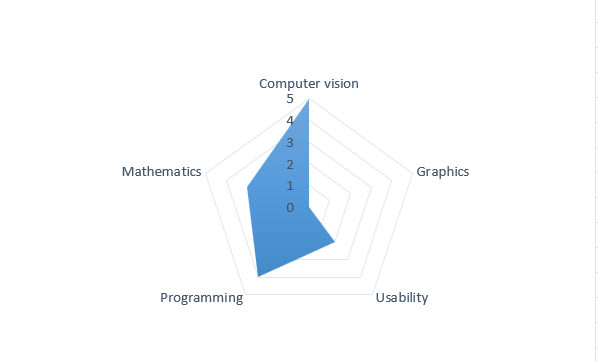
Vision Language Action models (VLA) show impressive results on many robotics tasks like picking and placing clothes. However, training a VLA requires huge amount of robot demonstrations and even fine tuning the action decoder step for a new robot requires a lot of demonstrations.
Since collecting real robot demonstrations is highly time-consuming, reducing the number of required demonstrations is highly beneficial. This can be achieved in several ways, for example through the use of simulation environments. This thesis investigates methods for reducing the need for real robot demonstrations.
The master thesis work focuses on the following/example of research questions
- Can hand-eye and/or gripper calibration be used to switch between different setups without any additional training?
- Does the existing VLA models using depth require less demonstrations compared to the models only using RGB?
- Can the depth be used in a different way to reduce the number of demonstrations needed?
- To what extent can simulators like MUJOCO be used instead of real robot demonstrations?
Prerequisites
You should have some familiarity with modern computer vision architectures and be motivated to dive deeper. You should be comfortable programming in Python.
Contact
For more information about the position, contact:
Anders Moe, Software Developer, anders.moe@sick.se
We warmly welcome your application — please submit it no later than October 25th.
SICK is a world-leading supplier of sensors and sensor solutions for industrial applications. We’re part of SICK AG — a global leader in sensor technology with 10,000 employees across 50 countries and headquarters in Freiburg, Germany. Together, we build technology that makes industries more efficient, intelligent, and safe.
As a Machine Vision Innovation Center, SICK Linköping develops advanced AI-powered software that drives the future of both manufacturing and logistics automation. Whether it’s helping robots pick the right item or enabling high-precision quality control with 2D and 3D vision, our solutions bring clarity, speed, and smart decision-making to complex industrial environments — all driven by a dedicated team of 100 colleagues.
We are very proud of being a healthy and attractive workplace. We have consistently been recognized as one of the best workplaces in Sweden according to the Great Place to Work survey. We actively work to reduce our climate footprint and engage in various initiatives to contribute to society and enhance diversity at our workplace.
What the Master Thesis is about/background to the problem to investigate
In industrial settings, one would often like to predict not only a bounding box or segmentation for an object visible in the image, but also determine exactly how the object is oriented and where its key points are located. This is especially relevant for objects that consist of well-defined parts but where the size and configuration of these parts can vary.
Modern vision architectures such as DETR or DEIM are built on shared backbones which can be combined with different heads for tasks like bounding box prediction, segmentation mask prediction or human pose estimation. This thesis would investigate how such architectures can be adapted to solve the “industrial pose estimation” task described above, with focus on situations that have only a few training images, so called few-shot problems.
The master thesis work focuses on the following/example of research questions
- What modern methods for human pose estimation are suitable for industrial pose estimation?
- How could they be adapted to better suit industrial pose estimation?
- How do these methods perform in industrial few-shot scenarios?
Prerequisites
You should have some familiarity with modern computer vision architectures and be motivated to dive deeper. You should be comfortable programming in Python. 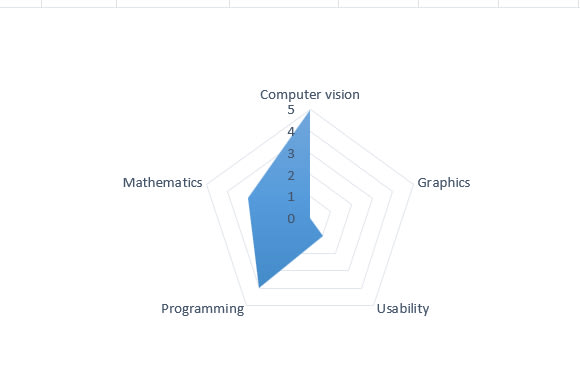
Contact
For more information about the position, contact:
Erik Hedberg, Senior Algorithm Developer, + 46 722 26 77 57
We warmly welcome your application — please submit it no later than October 25th.
SICK is a world-leading supplier of sensors and sensor solutions for industrial applications. We’re part of SICK AG — a global leader in sensor technology with 10,000 employees across 50 countries and headquarters in Freiburg, Germany. Together, we build technology that makes industries more efficient, intelligent, and safe.
As a Machine Vision Innovation Center, SICK Linköping develops advanced AI-powered software that drives the future of both manufacturing and logistics automation. Whether it’s helping robots pick the right item or enabling high-precision quality control with 2D and 3D vision, our solutions bring clarity, speed, and smart decision-making to complex industrial environments — all driven by a dedicated team of 100 colleagues.
We are very proud of being a healthy and attractive workplace. We have consistently been recognized as one of the best workplaces in Sweden according to the Great Place to Work survey. We actively work to reduce our climate footprint and engage in various initiatives to contribute to society and enhance diversity at our workplace.
What the Master Thesis is about/background to the problem to investigate
Industrial software is often evaluated based on technical performance and functionality. While these aspects are important, successful products must also be easy to learn, efficient to use, and straightforward to demonstrate and explain to customers.
Within industrial robot guidance, different stakeholder groups interact with software in different ways. Application engineers and integrators configure and deploy systems, operators use them in daily production, and sales engineers demonstrate their capabilities to prospective customers. Each group has its own expectations, challenges, and measures of success.
As industrial software becomes increasingly focused on usability and user experience, there is a growing need for methods that can evaluate products from a human perspective in addition to a purely technical one. Factors such as task completion time, error rates, intuitive workflows, cognitive load, and overall user satisfaction may provide valuable insights into how effectively a product supports its users.
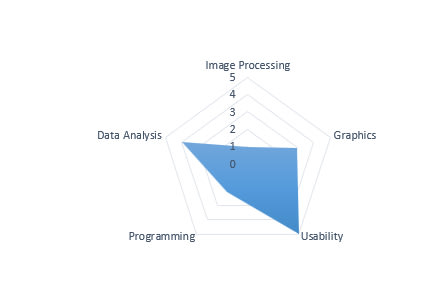
This thesis will investigate how usability and cognitive load can be evaluated in industrial robot guidance software. The work may include comparing different software products through representative application setup tasks and identifying factors that influence both user experience and perceived product value.
The master thesis work focuses on the following/example of research questions
- How can usability and cognitive load be measured in industrial engineering software?
- What aspects of a software workflow contribute most to an efficient and intuitive user experience?
- How do users with different backgrounds experience the same robot guidance task?
- Which steps in a system configuration workflow are most prone to confusion, errors, or delays?
- How do different robot guidance software products compare with respect to usability and perceived complexity?
- What relationship exists between usability, customer perception, and commercial value?
Prerequisites
This thesis will involve user studies, data analysis, experimentation, software engineering, and human-computer interaction.
You should have a strong interest in usability, user experience, software development, psychology, human-computer interaction, or industrial systems. Experience with experimental design, statistics, or user-centered design is beneficial.
Contact
For more information about the position, contact:
Fredrik Lindgren, Software Developer, +46 722 26 77 33, fredrik.lindgren@sick.se
We warmly welcome your application — please submit it no later than October 25th.
SICK is a world-leading supplier of sensors and sensor solutions for industrial applications. We’re part of SICK AG — a global leader in sensor technology with 10,000 employees across 50 countries and headquarters in Freiburg, Germany. Together, we build technology that makes industries more efficient, intelligent, and safe.
As a Machine Vision Innovation Center, SICK Linköping develops advanced AI-powered software that drives the future of both manufacturing and logistics automation. Whether it’s helping robots pick the right item or enabling high-precision quality control with 2D and 3D vision, our solutions bring clarity, speed, and smart decision-making to complex industrial environments — all driven by a dedicated team of 100 colleagues.
We are very proud of being a healthy and attractive workplace. We have consistently been recognized as one of the best workplaces in Sweden according to the Great Place to Work survey. We actively work to reduce our climate footprint and engage in various initiatives to contribute to society and enhance diversity at our workplace.
What the Master Thesis is about/background to the problem to investigate
Automated palletizing systems must continuously decide where and how objects should be placed on a pallet. The quality of these decisions has a direct impact on pallet fill ratio, throughput, and overall system efficiency.
Many packing and palletizing algorithms have been proposed, ranging from simple heuristics to advanced optimization techniques. While these approaches can perform well under certain conditions, their suitability depends on factors such as the available knowledge about incoming objects, computational requirements, and the constraints of real-world robotic systems.
In practical applications, decisions often need to be made with incomplete information and under changing conditions. Furthermore, solutions that perform well in simulation may not always translate directly to industrial environments where positioning errors, object variations, and other uncertainties are present.
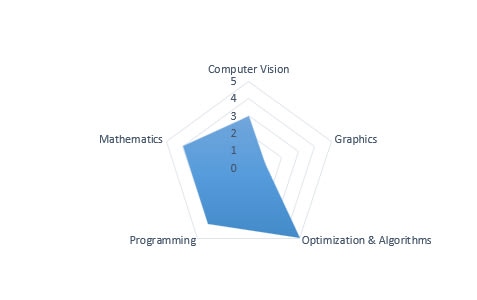
This thesis will investigate optimization of placement strategies for vision-guided robotic palletizing. The work may include studying existing palletizing algorithms, evaluating their strengths and limitations, and exploring how information about current and future objects can be used to improve palletizing performance.
The master thesis work focuses on the following/example of research questions
- What existing packing and palletizing algorithms are suitable for robotic palletizing applications?
- How does access to information about future incoming objects affect palletizing performance?
- What trade-offs exist between pallet fill ratio, computational complexity, and cycle time?
- How do different placement strategies compare in realistic palletizing scenarios?
- How well do results obtained in simulation transfer to real robotic palletizing systems?
Prerequisites
This thesis will involve programming, algorithm development, mathematics, optimization, and computer vision. You should have a strong interest in problem solving and software development. Experience within optimization, computer vision, robotics, or related fields is beneficial.
Contact
For more information about the position, contact:
Fredrik Lindgren, Software Developer, +46 722 26 77 33, fredrik.lindgren@sick.se
Anders Moe, Algorithm Developer, anders.moe@sick.se
We warmly welcome your application — please submit it no later than October 25th.
SICK is a world-leading supplier of sensors and sensor solutions for industrial applications. We’re part of SICK AG — a global leader in sensor technology with 10,000 employees across 50 countries and headquarters in Freiburg, Germany. Together, we build technology that makes industries more efficient, intelligent, and safe.
As a Machine Vision Innovation Center, SICK Linköping develops advanced AI-powered software that drives the future of both manufacturing and logistics automation. Whether it’s helping robots pick the right item or enabling high-precision quality control with 2D and 3D vision, our solutions bring clarity, speed, and smart decision-making to complex industrial environments — all driven by a dedicated team of 100 colleagues.
We are very proud of being a healthy and attractive workplace. We have consistently been recognized as one of the best workplaces in Sweden according to the Great Place to Work survey. We actively work to reduce our climate footprint and engage in various initiatives to contribute to society and enhance diversity at our workplace.
Background
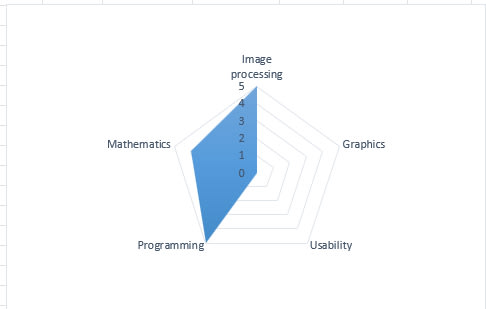
SICK’s laser triangulation cameras produce spatially aligned 2D grayscale images and 2.5D heightmaps. Together, these two modalities provide complementary information about an object: grayscale images capture visual appearance and texture, while heightmaps provide information about surface geometry.
Heightmap images are by nature much dissimilar to 2D grayscale images: each pixel represents its height and may even be undefined. Due to this, existing AI vision encoder backbones -- often only trained on natural images -- are not able to represent heightmaps in a good way.
Thesis objective
JEPA (Joint-Embedding Predictive Architecture) is a self-supervised learning framework receiving much attention from the scientific research community. For missing information, JEPA-style methods learn to recover the missing information from its latent space, rather than first reconstructing pixels. This makes them an interesting candidate for learning representations that are robust to occlusions and missing height data.
The plan is to fine-tune an existing JEPA-trained backbone with aligned 2D/2.5D images, teaching the model to place the latent representations of the height map images close to its 2D counterpart. We will then compare the performance of such fine-tuned models on specific downstream tasks, for different amounts of missing data.
Research environment
The thesis will be carried out at SICK, in collaboration with the Computer Vision Laboratory (CVL) at Linköping University.
You will work closely with Matheus Bernat, an industrial PhD student at SICK and CVL, Linköping University, whose research focuses on multimodal AI, and representation learning.
The project is intended to have a strong research component. For a motivated student, there is an opportunity to work towards a joint publication towards the end of the thesis.
Contact
For more information about the position, contact:
Matheus Bernat, matheus.bernat@liu.se
We warmly welcome your application — please submit it no later than October 25th.
SICK is a world-leading supplier of sensors and sensor solutions for industrial applications. We’re part of SICK AG — a global leader in sensor technology with 10,000 employees across 50 countries and headquarters in Freiburg, Germany. Together, we build technology that makes industries more efficient, intelligent, and safe.
As a Machine Vision Innovation Center, SICK Linköping develops advanced AI-powered software that drives the future of both manufacturing and logistics automation. Whether it’s helping robots pick the right item or enabling high-precision quality control with 2D and 3D vision, our solutions bring clarity, speed, and smart decision-making to complex industrial environments — all driven by a dedicated team of 100 colleagues.
We are very proud of being a healthy and attractive workplace. We have consistently been recognized as one of the best workplaces in Sweden according to the Great Place to Work survey. We actively work to reduce our climate footprint and engage in various initiatives to contribute to society and enhance diversity at our workplace.
What the Master Thesis is about/background to the problem to investigate
Modern machine vision systems continuously increase in resolution and frame rate, creating demanding requirements on data transfer performance between cameras, processing units, and host computers. While GigE Vision is widely adopted in industrial vision applications, emerging technologies such as RDMA over Converged Ethernet (RoCEv2), USB4, and Thunderbolt offer new opportunities for achieving higher throughput and lower latency with reduced CPU overhead. This thesis aims to investigate and compare state-of-the-art high-speed communication technologies suitable for future machine vision products, with particular focus on FPGA-based implementations and RDMA technologies.
Thesis outline
- Literature study of GigE Vision, RoCEv2, USB4, Thunderbolt, and other high-speed interconnect technologies.
- Evaluation and benchmarking of existing RoCEv2 FPGA implementations from research groups or commercial providers.
- Performance measurements including throughput, latency, CPU utilization, memory bandwidth, and scalability.
- Investigation of FPGA implementation aspects including protocol complexity, memory architecture, hardware/software partitioning, and resource requirements.
- Development and evaluation of selected FPGA building blocks or proof-of-concept functionality related to RDMA-based image streaming.
- Estimation of feasibility, engineering effort, FPGA resource usage, and performance benefits of an in-house RoCEv2 implementation for future machine vision products.
The master thesis work focuses on the following/example of research questions
The thesis will be carried out at SICK in Linköping. You will work in a team developing next-generation machine vision solutions and gain hands-on experience with advanced networking technologies, FPGA platforms, Linux-based embedded systems, and high-performance data acquisition architectures.
Keywords
FPGA, RDMA, RoCEv2, GigE Vision, High-Speed Networking, Zynq UltraScale+, Embedded Linux, Hardware Acceleration, Ethernet, Machine Vision.
Prerequisites
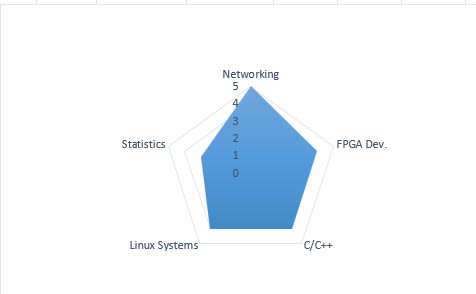
- Excellent programming skills in C/C++.
- Experience with FPGA development and digital design using Verilog, VHDL, or HLS.
- Good knowledge of Linux environments, including performance analysis, driver interaction, and system-level debugging.
- Strong understanding of computer networking fundamentals, including Ethernet, TCP/IP, and packet-based communication.
- Experience working with embedded systems and System-on-Chip (SoC) platforms.
Meriting experience:
Xilinx Zynq UltraScale+ platforms
Vivado and Vitis development tools
High-speed interfaces such as PCIe, Ethernet, USB4, or Thunderbolt
RDMA technologies including RoCEv2
Networking analysis tools such as Wireshark and iperf
Contact
For more information about the position, contact:
Fredrik Claesson, fredrik.claesson@sick.se
We warmly welcome your application — please submit it no later than October 25th.
SICK is a world-leading supplier of sensors and sensor solutions for industrial applications. We’re part of SICK AG — a global leader in sensor technology with 10,000 employees across 50 countries and headquarters in Freiburg, Germany. Together, we build technology that makes industries more efficient, intelligent, and safe.
As a Machine Vision Innovation Center, SICK Linköping develops advanced AI-powered software that drives the future of both manufacturing and logistics automation. Whether it’s helping robots pick the right item or enabling high-precision quality control with 2D and 3D vision, our solutions bring clarity, speed, and smart decision-making to complex industrial environments — all driven by a dedicated team of 100 colleagues.
We are very proud of being a healthy and attractive workplace. We have consistently been recognized as one of the best workplaces in Sweden according to the Great Place to Work survey. We actively work to reduce our climate footprint and engage in various initiatives to contribute to society and enhance diversity at our workplace.
Can't find what you're looking for?
You can always let us know who you are and what you are interested in!
Examples of previous thesis opportunities
Have a look at the films below for inspiration on topics for a thesis.
Mattias Johannesson
Handheld 3D Scanner

Daniel Rydström
Narrow Pretraining of Deep Neural Networks
Sofia Nilsson
Deep Learning in 3D Point Clouds
John Stynsberg
Language Models for Configurable Systems
Jens Edhammer
Photorealistic Simulations of Laser Triangulation System
Fredik Löfgren
Hyperspectral Cameras
Andreas Wrangsjö
Deep Learning from Teacher Sensors
Contact us
We are the People and Culture team at SICK Linköping. We can answer all your question on recruitment, life at SICK Linköping, student opportunities and much more.
Sarah Lantz
sarah.lantz@sick.se
+46 739 10 99 37
Customize your preferences
We use cookies to customize content and ads, to provide functions for social media and to analyze our traffic. We also share information about your use of our website with our social media, advertising and analytics partners who may combine it with other information that you have provided to them or that they have collected from your use of their services.
Necessary
Statistics
Preferences
Marketing
| Name | Description | Data sent to |
|---|---|---|
|
_wbCookiePermissions
Onecruiter
6 months
|
Necessary cookie, this cookie is set when a user accepts cookie policy. It saves your cookie preferences. | Onecruiter servers |
|
language / language.sig
Onecruiter
Session
|
Preference cookie, this cookie allows us to remember your preference of language when you navigate through the site. | Onecruiter servers |
|
position_ref
Onecruiter
7 days
|
Statistics cookie, this cookie allows us to remember which site referred you to us. | Onecruiter servers |
|
global_ref
Onecruiter
7 days
|
Statistics cookie, this cookie allows us to remember which site referred you to us. | Onecruiter servers |
|
visitor (sessionStorage)
Onecruiter
Session
|
This is technically sessionStorage (not a cookie), but is listed here for compatibility with cookie scanners. It stores a unique identifier to track whether the user is a unique visitor to the website or not. This runs as necessary and does not require consent. However, in cases where the customer manages cookies via their own solution in iframes, it runs as statistics and requires statistics consent. | Onecruiter servers |
|
_fa, usida, sb, datr, wd
Facebook
7 days
|
Marketing cookies, these cookies allows us to understand our audience better. | Facebook servers (United States) |
|
_ga, _gid, _gat_workbuster (conditional - if careersite has Google Analytics code)
Google
6 months
|
Statistics cookies, these cookies allows us to understand how you navigate through the site. These cookies are only set if you have configured Google Analytics tracking or Google Tag Manager. | Google Analytics servers (United States) |
Do you allow us to use cookies?
We use cookies to customize content and ads, to provide functions for social media and to analyze our traffic.